Canada continues to be one of the most preferred study destinations for Indian students due to its world-class education system, affordable tuition options, multicultural environment, and excellent post-study work opportunities. Every year, thousands of students choose to study in Canada to gain internationally recognized qualifications and build successful global careers.
If you’re planning to study abroad in Canada, understanding the admission requirements, visa process, language requirements, and financial documentation is essential. This guide answers the most common questions Indian students have about studying in Canada and provides a step-by-step roadmap to help you get started.
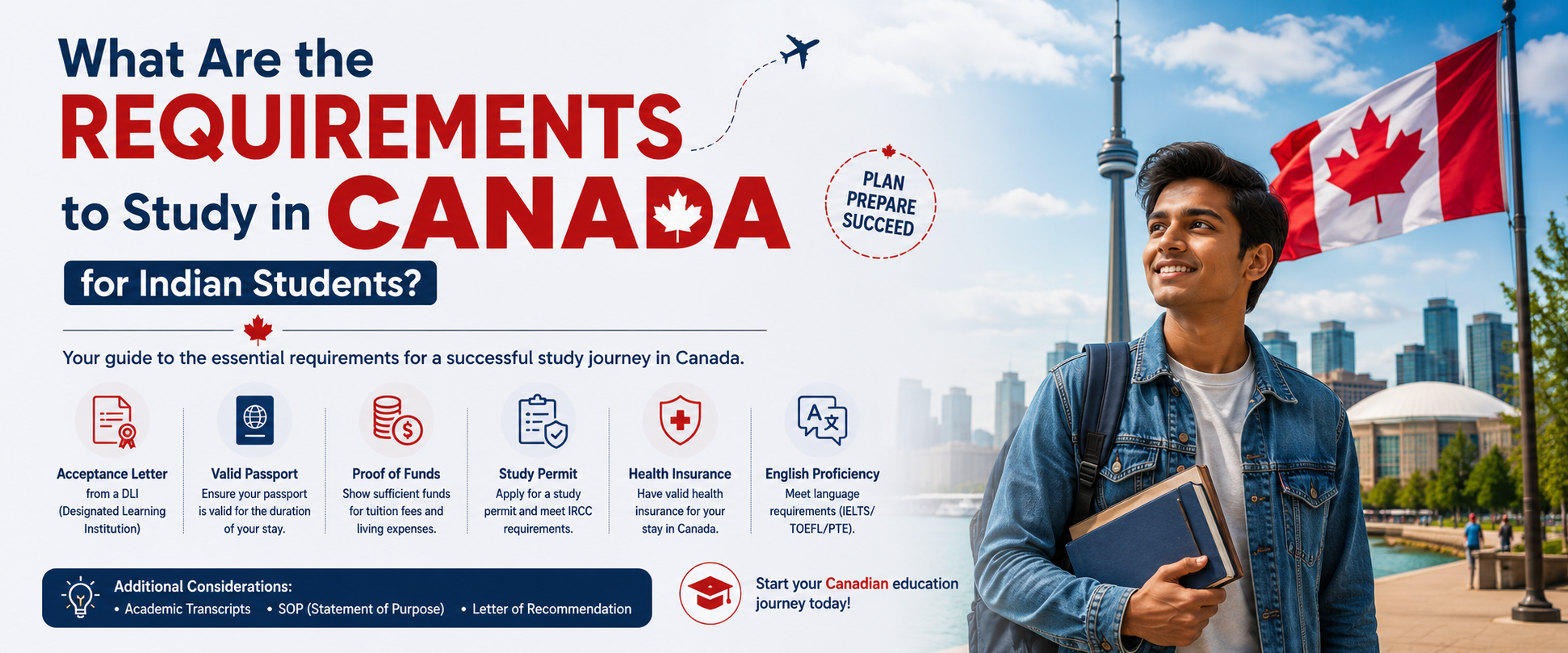
What Are the Requirements to Study in Canada for Indian Students?
To study in Canada, Indian students typically need:
- Valid passport
- Academic transcripts and certificates
- Letter of Acceptance (LOA) from a Canadian institution
- English language proficiency test scores (IELTS, PTE, TOEFL, or Duolingo where accepted)
- Statement of Purpose (SOP)
- Proof of funds
- Canada Study Permit (Student Visa)
- Medical examination (if required)
- Biometrics submission
- Passport-size photographs
Requirements may vary depending on the university, course, and province.
Why Study in Canada?
Canada consistently ranks among the top destinations for international students because of its quality education and career opportunities.
Benefits of Studying in Canada
- Globally recognized degrees
- High-quality education system
- Affordable tuition compared to some countries
- Post-Graduation Work Permit (PGWP)
- Pathways to permanent residency
- Safe and welcoming environment
- Strong job market for graduates
External Resource:
https://www.educanada.ca
Step 1: Meet Academic Requirements
The first requirement for studying in Canada is meeting the academic eligibility criteria.
For Diploma and Undergraduate Programs
Most colleges and universities require:
- Completion of Class 12
- Academic transcripts
- Minimum percentage requirements (varies by institution)
- Subject-specific prerequisites for certain programs
For Postgraduate Programs
Students generally need:
- Bachelor’s degree from a recognized institution
- Academic transcripts
- Relevant academic background
- Additional requirements depending on the program
Some programs may also require work experience or portfolios.
Step 2: Demonstrate English Language Proficiency
Most Canadian institutions require proof of English language skills.
Accepted tests include:
IELTS Academic
One of the most widely accepted English tests for Canada.
PTE Academic
Increasingly accepted by Canadian universities and colleges.
TOEFL iBT
Accepted by many Canadian institutions.
Duolingo English Test
Some institutions accept Duolingo as an alternative.
Always verify requirements directly with your chosen institution.
External Resource:
https://www.ielts.org
Step 3: Obtain a Letter of Acceptance (LOA)
Before applying for a student visa, you must receive admission from a Designated Learning Institution (DLI).
The admission process typically involves:
- Choosing a course
- Submitting academic documents
- Providing language test scores
- Paying application fees
- Receiving an offer letter
Professional guidance from a consultancy for study in Canada can help students identify suitable universities and improve their admission chances.
Step 4: Prepare Your Statement of Purpose (SOP)
A Statement of Purpose is one of the most important documents in your application.
Your SOP should explain:
- Why you want to study in Canada
- Why you selected the course
- Your academic background
- Career goals
- Why the chosen institution is suitable
A well-written SOP can strengthen both admission and visa applications.
Step 5: Show Proof of Funds
Canada requires international students to demonstrate that they can support themselves financially.
Proof of funds generally covers:
- First-year tuition fees
- Living expenses
- Travel expenses
Acceptable documents may include:
- Bank statements
- Education loan approvals
- Financial sponsorship documents
- Guaranteed Investment Certificate (GIC)
Always check the latest requirements through official government sources.
External Resource:
https://www.canada.ca/en/immigration-refugees-citizenship.html
Step 6: Apply for a Canada Study Permit
A Study Permit is the official authorization that allows international students to study in Canada.
Documents Required for a Study Permit
- Passport
- Letter of Acceptance
- Proof of funds
- Academic documents
- SOP or study plan
- Medical examination (if applicable)
- Biometrics
The application can usually be completed online.
Step 7: Complete Medical Examination and Biometrics
Indian students are generally required to:
Medical Examination
Complete a medical exam with an approved panel physician.
Biometrics
Provide fingerprints and photographs at a Visa Application Centre (VAC).
These steps are essential for visa processing.
Top Canadian Universities for Indian Students
Some of Canada’s most recognized universities include:
- University of Toronto
- University of British Columbia
- McGill University
- University of Alberta
- University of Waterloo
- Western University
Students should select institutions based on:
- Course offerings
- Budget
- Career opportunities
- Location
- Scholarship availability
Scholarships for Indian Students in Canada
Many institutions and organizations offer scholarships to international students.
Popular scholarship options include:
- Vanier Canada Graduate Scholarships
- Ontario Graduate Scholarship
- University-specific scholarships
- Entrance scholarships
- Merit-based awards
Scholarships can significantly reduce educational expenses.
How a Consultancy for Study in Canada Can Help
The application process involves multiple steps and documentation requirements.
Professional consultants can assist with:
University Selection
Choosing institutions based on profile and career goals.
Admission Applications
Preparing and submitting applications accurately.
SOP Assistance
Creating strong Statements of Purpose.
Visa Documentation
Ensuring all documents meet Canadian immigration requirements.
Scholarship Guidance
Identifying suitable funding opportunities.
Final Thoughts
Understanding the requirements to study in Canada is the first step toward building a successful international education journey. From academic qualifications and language tests to financial documentation and study permits, careful planning is essential for a smooth application process.
If you’re planning to study in Canada for Indian students, seeking guidance from experienced professionals can help simplify admissions, visa applications, and scholarship opportunities.
Ready to Study in Canada?
Get expert support with university admissions, visa applications, and career guidance from Way2Abroad.
Learn More: https://way2abroadconsulting.com/study-in-canada/
FAQ's
Yes. Indian students can apply for diploma, certificate, and undergraduate programs after completing Class 12.
Many institutions accept IELTS, while some also accept PTE, TOEFL, or Duolingo. Requirements vary by institution.
The required amount depends on tuition fees, living expenses, and current immigration regulations.
Eligible international students can often work part-time while studying, subject to Canadian regulations.
Yes. Canada offers high-quality education, strong career opportunities, multicultural communities, and pathways for post-study work.