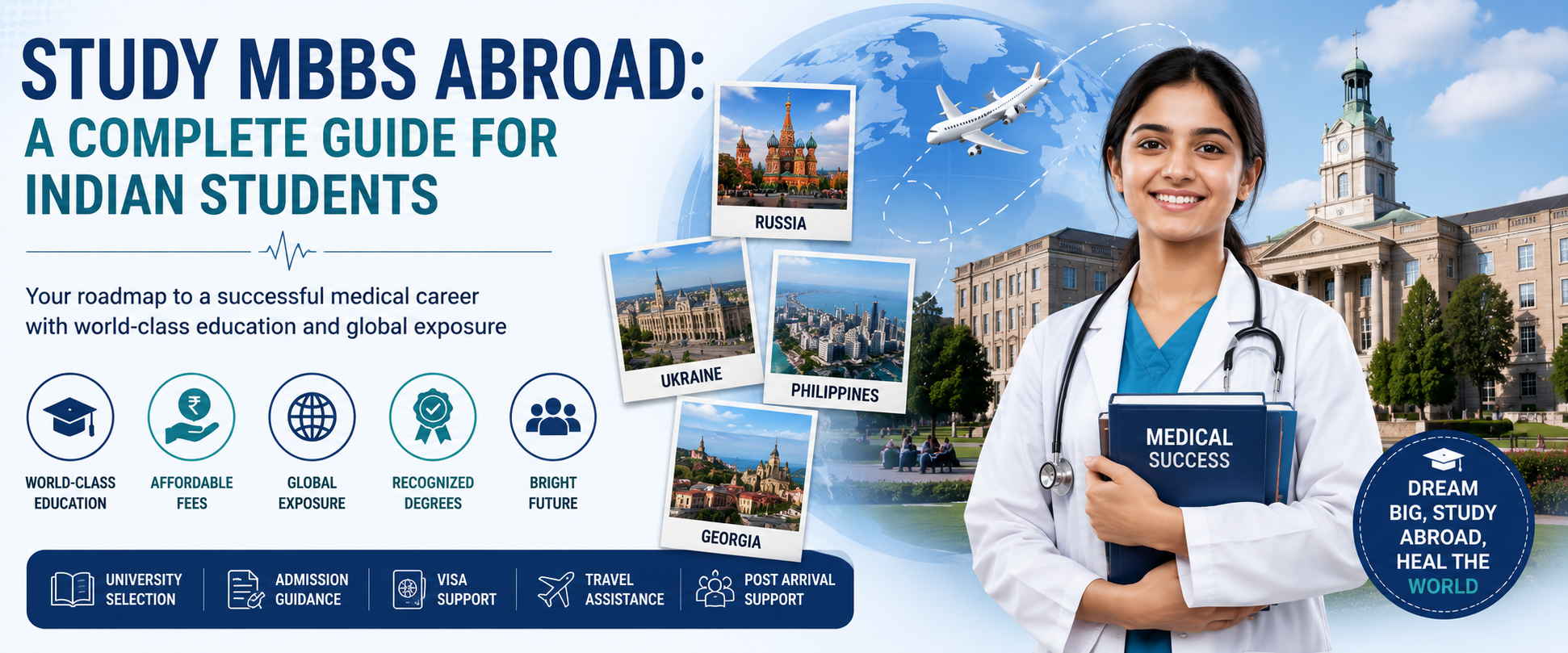
Pursuing a medical degree is a dream for thousands of students every year. However, limited seats and high tuition fees in private medical colleges make it challenging for many aspiring doctors to secure admission in India. This is why an increasing number of students choose to study MBBS abroad and achieve their dream of becoming qualified medical professionals.
Today, many internationally recognized universities offer high-quality medical education at affordable costs. From modern infrastructure and experienced faculty to globally accepted degrees, MBBS in abroad has become a popular choice among Indian students seeking quality education and excellent career opportunities.
If you are planning to pursue MBBS abroad, understanding the admission process, eligibility, costs, and available destinations will help you make an informed decision.
Why Choose MBBS Abroad?
Studying medicine overseas offers several academic and professional advantages. Many foreign universities provide internationally recognized medical programs that combine theoretical learning with practical clinical training.
Some of the major benefits of choosing MBBS study abroad include:
- Affordable tuition fees compared to many private medical colleges
- Globally recognized medical degrees
- Modern laboratories and teaching hospitals
- Advanced medical curriculum
- International exposure
- English-medium MBBS programs
- Better student-to-faculty ratio
- Opportunities for global medical careers
These advantages make studying medicine abroad an attractive option for students looking for quality education and international experience.
Benefits of Studying MBBS Abroad
Choosing to study MBBS abroad offers numerous long-term benefits that extend beyond academics.
Affordable Medical Education
Many countries offer quality medical education at significantly lower tuition fees than private medical colleges in India.
Globally Recognized Universities
Many medical universities are recognized by international medical bodies, allowing graduates to pursue licensing exams and higher education in different countries.
Modern Medical Infrastructure
Students gain practical experience using advanced laboratories, simulation centers, and teaching hospitals equipped with modern medical technology.
International Learning Environment
Studying alongside students from different countries helps develop cultural awareness, communication skills, and a global perspective on healthcare.
Better Clinical Exposure
Most universities emphasize hands-on clinical training, allowing students to work with experienced doctors and real patients during their education.
Popular Countries for MBBS in Abroad
Many destinations have become preferred choices for Indian students due to their affordable education, recognized universities, and quality medical training.
Russia
Known for affordable tuition fees, experienced faculty, and globally recognized medical universities.
Georgia
Offers English-medium MBBS programs, modern infrastructure, and excellent clinical exposure.
Kazakhstan
Popular for cost-effective education and internationally recognized medical degrees.
Uzbekistan
Provides affordable medical education with modern teaching methodologies and practical training.
Kyrgyzstan
A preferred destination for students seeking quality education at reasonable costs.
Philippines
Offers an education system similar to the United States and is popular among Indian medical aspirants.
Nepal
A convenient option for Indian students due to geographical proximity and cultural similarities.
Eligibility to Study MBBS Abroad
Although eligibility requirements may vary depending on the country and university, the general criteria include:
- Completion of 10+2 with Physics, Chemistry, and Biology
- Minimum qualifying marks as specified by the university
- NEET qualification (for Indian students, as applicable under current regulations)
- Valid passport
- Medical fitness certificate
- Required admission documents
Students should always verify the latest admission guidelines before applying.
Admission Process for MBBS Abroad
The admission process is generally straightforward when guided by experienced education consultants.
Typical steps include:
- Career counseling
- University selection
- Eligibility assessment
- Application submission
- Admission letter
- Documentation verification
- Visa application
- Fee payment
- Travel arrangements
- University enrollment
Professional guidance helps students complete each stage smoothly and avoid unnecessary delays.
Documents Required for MBBS Abroad Admission
Students generally need the following documents:
- 10th and 12th mark sheets
- Passport
- Passport-size photographs
- NEET scorecard (if applicable)
- Birth certificate
- Medical certificate
- Admission application form
- Invitation letter from the university
- Visa documents
Some universities may request additional documentation based on their admission policies.
How to Choose the Right University for MBBS Study Abroad
Selecting the right university is one of the most important decisions in your medical career.
Consider the following factors:
University Recognition
Choose universities recognized by appropriate national and international medical authorities.
Curriculum
Review the academic structure, clinical training, and internship opportunities.
Language of Instruction
Ensure the MBBS program is offered in English if you are not fluent in the local language.
Infrastructure
Modern laboratories, hospitals, libraries, and research facilities enhance learning.
Clinical Training
Practical exposure plays a significant role in medical education.
Student Support Services
Look for universities offering accommodation assistance, international student support, and academic counseling.
Career Opportunities After MBBS Abroad
Graduating with an internationally recognized medical degree opens multiple career pathways.
Students may choose to:
- Practice medicine after meeting licensing requirements
- Pursue postgraduate medical education
- Work in hospitals and healthcare institutions
- Enter medical research
- Join public health organizations
- Work with international healthcare agencies
- Explore healthcare administration and medical education
Career opportunities depend on licensing regulations and professional qualifications in the country where graduates wish to practice.
Why Indian Students Prefer MBBS Abroad
Every year, thousands of students choose MBBS in abroad because it offers a combination of affordability, quality education, and international exposure.
Some of the main reasons include:
- Limited government medical seats in India
- Affordable tuition fees
- Simple admission procedures
- Internationally recognized universities
- Modern teaching methods
- Diverse cultural experience
- Better infrastructure and clinical training
- Global career opportunities
These advantages continue to make MBBS study abroad a preferred option for aspiring doctors.
Tips Before You Study MBBS Abroad
Before applying, students should:
- Research different countries and universities
- Verify university recognition and accreditation
- Understand the complete fee structure
- Learn about visa requirements
- Check accommodation facilities
- Understand licensing requirements for future practice
- Plan finances carefully
- Seek guidance from experienced education consultants
Proper planning helps ensure a successful academic journey and a smooth transition to studying abroad.
FAQ's
Studying MBBS abroad offers access to affordable medical education, internationally recognized universities, modern infrastructure, excellent clinical training, and global career opportunities.
For Indian students, qualifying NEET is generally required as per the applicable regulations to pursue MBBS abroad and practice medicine in India after graduation. Students should check the latest official guidelines.
Popular destinations include Russia, Georgia, Kazakhstan, Uzbekistan, Kyrgyzstan, the Philippines, and Nepal due to their affordable education, quality universities, and English-medium programs.
The duration varies depending on the country and university but generally ranges between five and six years, including clinical training or internship.
Many universities offer degrees that are recognized by relevant national and international medical authorities. Students should verify the recognition status of their chosen university before applying.
Yes, Indian students can pursue medical practice in India after fulfilling the licensing and regulatory requirements prescribed by the appropriate authorities.
The total cost depends on the country, university, tuition fees, accommodation, and living expenses. Many international universities offer more affordable options than private medical colleges in India.
An experienced consultant assists with university selection, eligibility assessment, application processing, documentation, visa guidance, accommodation support, and pre-departure assistance, making the admission process smoother and more efficient.
Study MBBS Abroad: Complete Guide to MBBS in Abroad for Indian Students