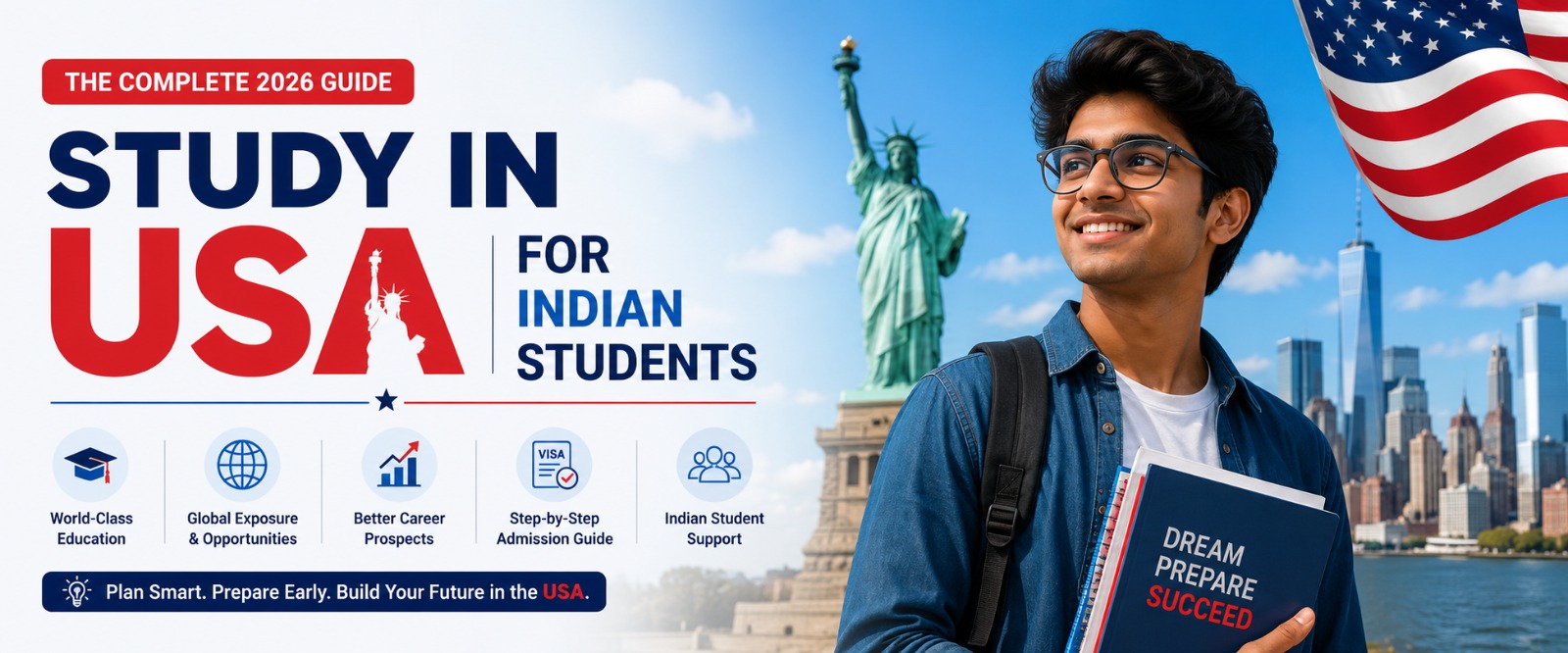
For many Indian students, the dream to study in USA is about much more than earning a degree. It’s about gaining global exposure, accessing world-class education, building international networks, and creating career opportunities that can shape the future.
However, the process can feel overwhelming.
Which university should you choose? How much does it cost? What are the visa requirements? Is a study abroad consultant necessary? And most importantly how do you improve your chances of admission?
This guide answers all those questions and more.
Whether you’re planning undergraduate studies, a master’s degree, or professional education, this comprehensive guide will help you understand everything about study in USA for Indian students in 2026.
What Does It Mean to Study in USA?
Studying in the United States means enrolling in an accredited American university, college, or educational institution to earn a recognized academic qualification.
The USA remains one of the most popular destinations for international students because it offers:
- Globally recognized degrees
- Research-focused education
- Flexible course structures
- Strong career opportunities
- Diverse cultural experiences
- Access to cutting-edge technology and innovation
More than one million international students choose the United States every year, making it one of the most diverse educational destinations in the world.
Why Do Indian Students Choose the USA?
Quick Answer
Indian students choose the USA because it offers high-quality education, excellent career prospects, advanced research opportunities, and globally recognized degrees.
Key Benefits
1. World-Class Universities
Many of the world’s top-ranked universities are located in the USA.
Examples include:
- Harvard University
- Stanford University
- Massachusetts Institute of Technology
- University of California Berkeley
These institutions consistently rank among the best globally for research, innovation, and employability.
2. Flexible Education System
Unlike many countries, American universities allow students to:
- Explore multiple subjects
- Change majors
- Combine disciplines
- Customize academic pathways
This flexibility helps students discover their strengths before specializing.
3. Better Career Opportunities
Many international students pursue abroad studies in USA because of the strong job market and industry exposure.
Popular sectors include:
- Technology
- Healthcare
- Engineering
- Finance
- Data Science
- Artificial Intelligence
- Cybersecurity
Study in USA for Indian Students: Popular Courses
Indian students commonly choose:
Field | Popular Programs |
Engineering | Computer Science, Mechanical, Electrical |
Business | MBA, Finance, Marketing |
Technology | AI, Data Science, Cybersecurity |
Healthcare | Public Health, Nursing |
Science | Biotechnology, Physics |
Design | UX/UI, Graphic Design |
Law | LLM Programs |
How to Apply to Universities in the USA
Step 1: Research Universities
Before applying, evaluate:
- Rankings
- Tuition fees
- Scholarships
- Internship opportunities
- Graduate employment rates
- Location
Don’t choose a university based solely on rankings.
A mid-ranked university with strong industry partnerships can often provide better outcomes than a famous institution that doesn’t align with your career goals.
Step 2: Check Eligibility Requirements
Most universities require:
- Academic transcripts
- English proficiency scores
- Statement of Purpose (SOP)
- Letters of Recommendation
- Resume or CV
Some programs may also require:
- Portfolio
- GRE scores
- GMAT scores
Step 3: Prepare English Language Tests
Common tests include:
- IELTS
- TOEFL
- Duolingo English Test
Each university sets its own minimum requirements.
Step 4: Submit Applications
Most universities accept applications through:
- Direct university portals
- Common Application (for undergraduate programs)
- Coalition Application
Apply early whenever possible.
Step 5: Receive Admission Offer
If accepted, you’ll receive:
- Admission Letter
- Offer Letter
- I-20 Form
The I-20 is essential for your student visa application.
How Much Does It Cost to Study in USA?
One of the most searched questions is:
“How much does it cost to study in USA for Indian students?”
The answer depends on the university and location.
Estimated Annual Costs
Expense | Approximate Cost |
Tuition Fees | $15,000–$60,000 |
Accommodation | $8,000–$20,000 |
Food | $3,000–$8,000 |
Insurance | $1,000–$3,000 |
Miscellaneous | $2,000–$5,000 |
Total Estimated Cost
Most Indian students spend:
$25,000–$80,000 annually
depending on institution and lifestyle.
Scholarships for Indian Students
Scholarships can significantly reduce education costs.
Popular options include:
Merit-Based Scholarships
Awarded for:
- Academic excellence
- Leadership
- Extracurricular achievements
University Scholarships
Many American universities offer funding specifically for international students.
External Scholarships
Examples include:
- Fulbright Programs
- Inlaks Scholarships
- Tata Scholarships
- JN Tata Endowment
USA Student Visa Process Explained
What Visa Do You Need?
Most students require an F-1 Student Visa.
Application Steps
- Receive I-20 from university
- Pay SEVIS fee
- Complete DS-160 form
- Schedule visa interview
- Attend visa interview
- Receive visa approval
Common Visa Interview Questions
- Why did you choose this university?
- Why this course?
- How will you fund your education?
- What are your future plans?
Be honest, clear, and confident.
Should You Use a Consultancy for Study in USA?
Many students ask:
Is a consultancy for study in USA worth it?
The Short Answer
Yes—if you choose a reputable consultant.
A good consultancy for study in USA can help with:
- University selection
- SOP writing
- Application review
- Visa preparation
- Scholarship guidance
However, avoid agencies that guarantee admissions or visas.
No legitimate consultant can promise either.
Common Mistakes Indian Students Make
After working with hundreds of study-abroad applicants, these are the most common mistakes:
Applying Too Late
Many students start preparing only a few months before deadlines.
Top universities often review applications months in advance.
Choosing Universities Based Only on Rankings
A university’s fit matters more than its ranking.
Ignoring Scholarship Opportunities
Thousands of dollars in funding go unclaimed every year.
Weak Statement of Purpose
Generic SOPs often lead to rejections.
Admissions officers want authentic stories and clear goals.
Not Preparing for Visa Interviews
Poor preparation can create unnecessary stress and lower confidence.
Study in USA vs Other Countries
Factor | USA | Canada | UK |
Global Rankings | Excellent | Strong | Strong |
Research Opportunities | Outstanding | Good | Good |
Program Flexibility | Excellent | Moderate | Limited |
Employment Options | Strong | Strong | Moderate |
Cost | Higher | Moderate | Moderate |
Expert Insight: What Actually Matters in Admissions?
Many students believe perfect grades guarantee admission.
That’s rarely true.
Admissions teams evaluate:
- Academic performance
- Personal statement
- Leadership experience
- Volunteer work
- Career goals
- Problem-solving ability
A student with slightly lower grades but exceptional achievements often stands out more than a student with perfect scores and no extracurricular involvement.
The strongest applications tell a compelling story.
How to Improve Your Chances of Admission
Start Early
Begin preparation at least 12–18 months before intake.
Build a Strong Profile
Focus on:
- Internships
- Research projects
- Certifications
- Leadership activities
Create a Unique SOP
Your Statement of Purpose should explain:
- Why this program?
- Why this university?
- Why now?
- What are your future goals?
Apply Strategically
Use a mix of:
- Dream Universities
- Target Universities
- Safe Universities
What Is the Best Time to Apply?
Most universities offer:
Fall Intake
- August–September
- Most popular intake
- Maximum scholarship opportunities
Spring Intake
- January
- Limited course availability
Summer Intake
- Available for select programs
For most students, Fall intake provides the best opportunities.
Final Thoughts
The decision to study in USA for Indian students can be life-changing.
While the application process may seem complex initially, proper planning makes everything easier. Start early, research thoroughly, prepare strong applications, and seek guidance when needed.
Whether you’re applying independently or working with a consultancy for study in USA, your success depends on preparation and informed decision-making.
The students who achieve the best outcomes are not always the smartest—they are usually the most prepared.
Ready to begin your study abroad journey? Speak with an experienced study abroad consultant and create a personalized roadmap for your USA admission goals.
FAQ's
Most students spend between $25,000 and $80,000 per year, including tuition, accommodation, insurance, and living expenses.
Yes. F-1 visa holders can typically work on campus and may qualify for CPT and OPT opportunities.
The Fall intake is generally considered the best because it offers the largest selection of programs, scholarships, and internship opportunities.
Not always. Some universities accept TOEFL, Duolingo, or may waive English requirements under specific conditions.
No, but professional guidance can simplify university selection, applications, SOP writing, scholarships, and visa preparation.